How do porta potties work?
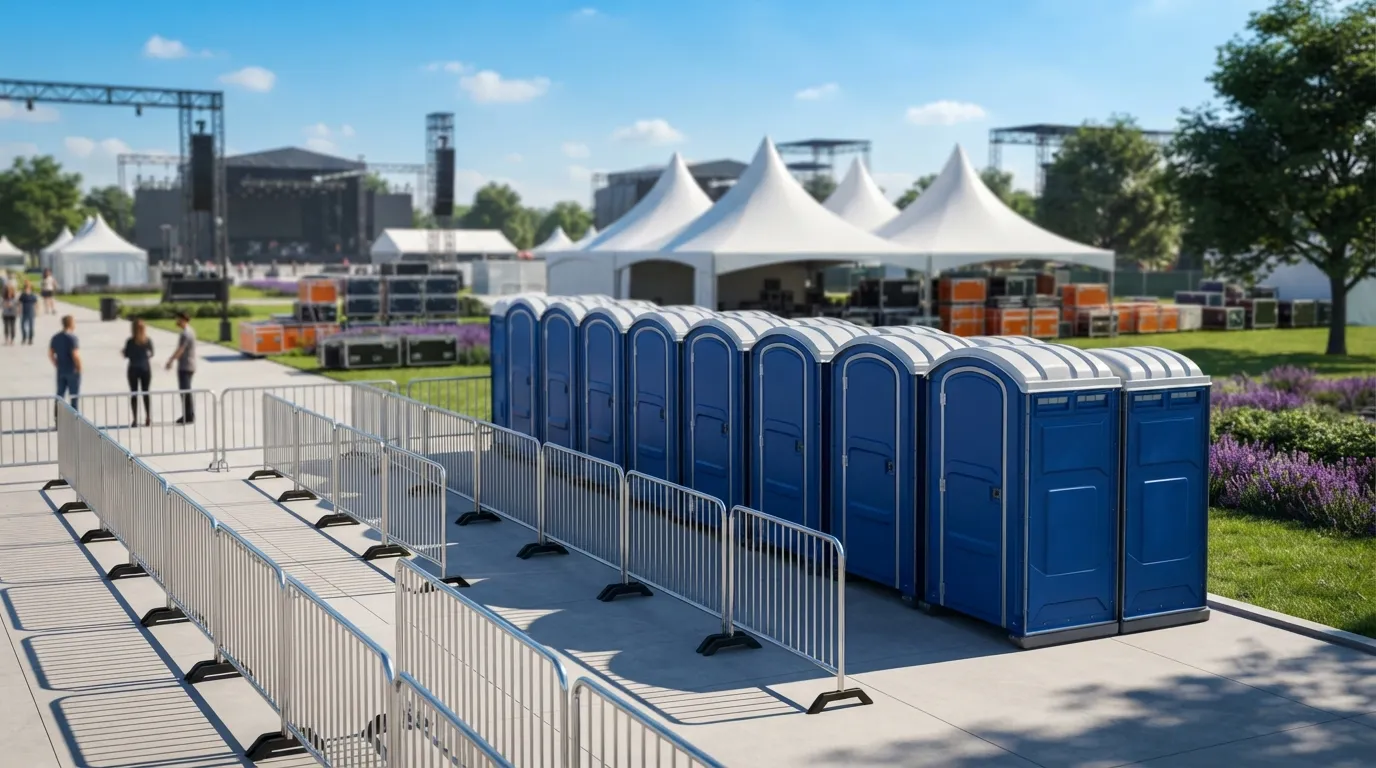
The basic unit is simple: a seat over a holding tank, a vent stack for airflow, and a supply of tissue. The tank sits under the standard porta potty rental, usually about 44 by 48 inches on the ground and 92 inches tall, so it fits tight jobsite corners without eating much space. When someone uses it, waste drops into the tank and mixes with a blue chemical treatment that breaks down solids and knocks back odor between pump-outs. There's no flush, no water line, nothing to freeze or burst. A service truck comes on schedule, vacuums the tank, rinses it, and refills the chemical charge. ANSI/PSAI Z4.3 sets a baseline service interval of once a week for up to 10 users across a 40 hour week, which is why a busy construction worker running to a porta potty all day on a big crew often needs more frequent pumping than that baseline covers. Check our porta potty rental cost page for what that upgraded schedule runs.
How does a portable sink work?
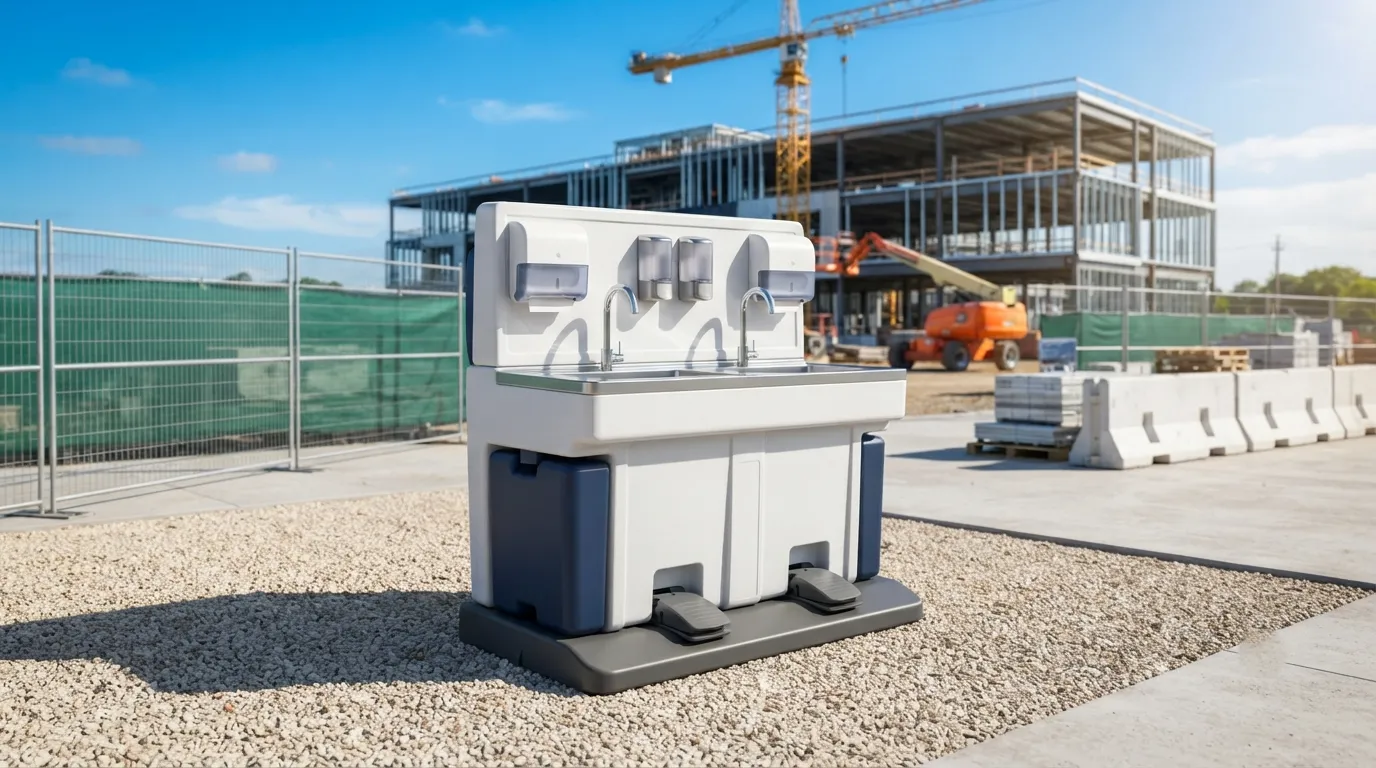
A portable sink rental uses a fresh water tank, usually with a foot pump or gravity feed, that pushes water through a spigot into a basin, and a separate gray water tank underneath catches the runoff. No hookup to a building or a hose bib required. Soap sits in a dispenser mounted on the unit, and 29 CFR 1910.141(d)(2) is clear that soap and a towel or hand-drying device are required, hand sanitizer does not count as a substitute. That matters for crews on painting or coating work, where OSHA 1926.51(f)(1) requires washing facilities for anyone applying paints, coatings, herbicides or insecticides, or handling other harmful contaminants. A handwashing station rental or hand sanitizer station rental can sit right next to the toilet bank so workers don't have to walk far. For general jobsite sanitation questions, our handwashing requirements page breaks down what's actually required versus what's just good practice.
How do flushable porta potties work?
A deluxe flushable porta potty adds a small onboard fresh water reservoir and a hand pump or foot pedal that pushes a measured rinse into the bowl after each use, flushing waste down into the same sealed holding tank a standard unit uses. It feels closer to a bathroom at home, with a sink, a mirror, and sometimes interior lighting. These run more than a standard unit and fit better for weddings, VIP areas, or office trailers on a construction site where crews expect something nicer than a basic box. An ADA accessible porta potty can also come in a flushable configuration, and ADA Standards section 304.3.1 requires a 60 inch turning circle inside so a wheelchair user can maneuver. Section 404.2.3 sets minimum door width at 32 inches. If you're clustering multiple units for an event in Palm Harbor, ADA Standards section 213.2 requires at least 5 percent of clustered single-user units to be accessible, never fewer than one.
Do camping porta potties work the same way?
Camping and remote-site units work on the same tank-and-chemical principle as any portable toilet rental, just scaled for lower traffic and longer stretches between service. A camping porta potty still needs the blue deodorizing chemical to keep smell down between visits, and OSHA 1926.51(c) sets the ratio construction sites use as a rough guide: one toilet for 20 workers or fewer, climbing to one toilet and one urinal per 40 workers past that point. Farms and agricultural operations follow a different rule, OSHA 1928.110, which calls for one facility per 20 hand-labor employees within a quarter mile walk, relevant for anyone running farm and agricultural restrooms here in Palm Harbor's outlying properties. For longer stays, ask about monthly porta potty rental pricing instead of paying day rates the whole time.
Pricing by rental length
| Unit type | Day | Week | Month |
|---|---|---|---|
| Standard | $100-$350 | $130-$500 | $125-$325 |
| ADA accessible | $200-$400 | $240-$500 | not typically monthly |
| Deluxe flushable | $85-$1,200 | $150-$290 | not typically monthly |
Delivery adds a separate fee, typically $100 to $150 for a single day drop, and event work often runs on flat per-event pricing instead. See porta potty rental per day for day-rate specifics or request a quote for a number built around your job.
Do porta potties smell if they're serviced right?
Not badly, if the chemical charge is fresh and the service interval matches actual use. Odor complaints usually mean the unit is overdue for pumping or the vent stack is blocked. See do porta potties smell for more on what controls it.
What chemicals go in a porta potty?
A blue deodorizing formula, usually a quaternary ammonium or formaldehyde-based blend, breaks down waste and masks odor between service visits. Search results for "portable toilet chemicals near me" mostly point to suppliers, not something a renter buys separately since it comes with the service.
How often does a septic tank need cleaning chemicals or pumping?
A residential septic tank typically needs pumping every 3 to 5 years depending on tank size and household size. Additives marketed as septic tank cleaning chemicals aren't a substitute for pumping. See how often to pump a septic tank for the full breakdown.
Can I get a porta potty diagram showing how the tank works?
We can walk you through the tank, vent stack and chemical system in person on delivery. The internal layout is straightforward: seat, tank, vent, chemical reservoir, no plumbing involved. Ask when you request a quote.
Do I need a permit for a porta potty in Palm Harbor?
Placement in the public right of way needs confirming with the city before delivery. Check our porta potty permit requirements page, and we're happy to help sort out placement on your property, whether that's Palm Harbor proper or nearby in Tarpon Springs, 7.5 miles north.
Next step
Get a delivery date
Tell us the address, the dates and the headcount. We size the order and confirm the route.